
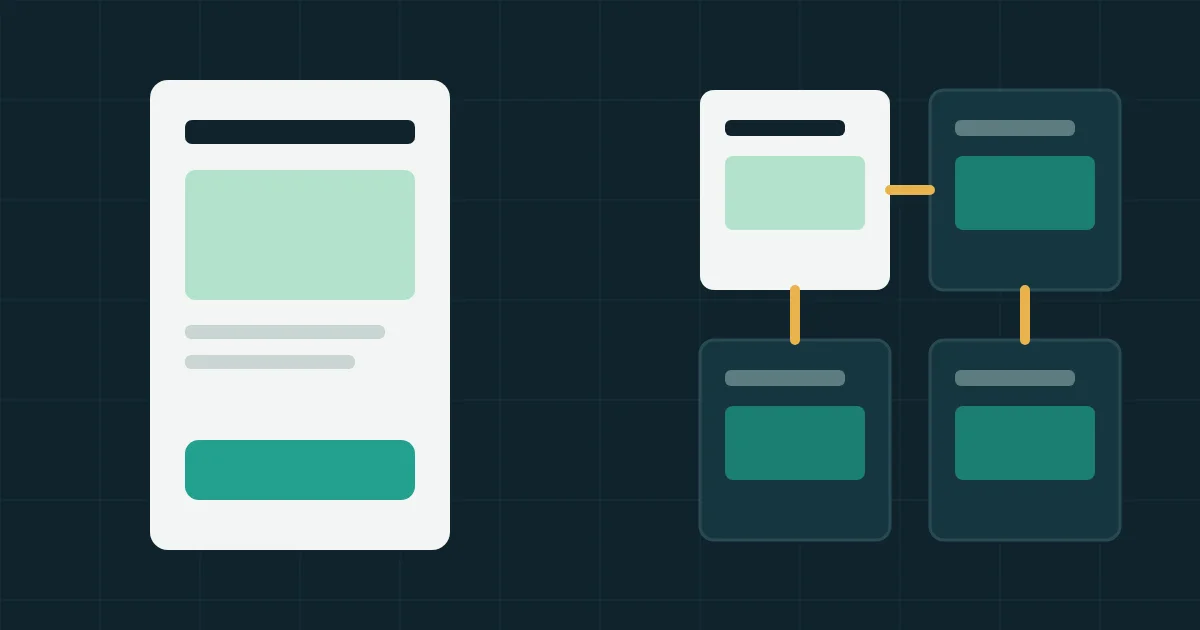
You need a landing page now if you have one clear offer and ads running this month. You need a full website if you offer several services, customers check you out before signing, or you want visits from Google search. Most companies end up needing both, so the real question is which to build first.
The difference is one of purpose before looks: a landing page leads one visitor to one action, while a website answers the questions of different visitors. Here you get a decision table by company stage, seven questions that settle the choice, and the mistake people make by starting with dozens of similar pages.
How a landing page and a website differ where it counts
| Item | Landing page | Full website |
|---|---|---|
| Serves | A visitor from a specific ad | Visitors from search, referrals and ads |
| Goal | One action | Introduce, persuade and route to the right service |
| Amount of work | A page, copy, a form and measurement | Several page templates and content for each service |
| Visits from Google | Limited, since it covers one topic | Grows with service pages and articles |
| Trust for a big decision | May not be enough alone | Gives the visitor somewhere to check you |
| Judging the result | Quick, after enough visits | Takes longer |
We explain a page's sections in order in what a landing page is, and the order of website pages in what turns a company website visitor into a client. Official advice matches this logic: Google recommends you choose a page that matches your ad and keywords, and make the action quick and easy.
A decision table by company stage and goal
| Your situation | Start with | Why |
|---|---|---|
| Testing a new offer you are not sure will sell | Landing page | Do not build a website for an unproven idea |
| A seasonal campaign or dated event | Landing page | It has a start, an end and one message |
| One service and an ad budget ready | Landing page, then a small site | Leads come first, then you build on what you learned |
| Several services, and customers comparing you with others | Small site | Visitors need a page for each service |
| Selling to companies, with several people in the decision | Site, then campaign pages | The finance manager will look you up before signing |
| Wanting long-term visits from search | Site | One page cannot cover all your customers search for |
| You have a site, and your ads go to the home page | A landing page inside your site | Usually the cheapest fix with the fastest effect |
This table sums up practical reasoning and is no fixed rule. If you are unsure about the lead source itself, the choice between ads and organic search comes first, and its table is in should your budget go to SEO or paid ads first.
Seven questions that settle what to build now
- Will you run ads within 30 days? If yes, a page matching the ad comes first.
- How many services do you want to sell this quarter? One can live on a page, and three need at least three pages.
- How long does the customer's decision take? A decision of hours can run on a page, and one of weeks needs a site to check.
- Do your customers search for your service on Google? If search is part of your plan, so is a site.
- Do you have enough real content? A site of ten empty pages is weaker than one strong page.
- Who will update content after launch? If nobody will, do not build what will never be updated.
- Do customers ask for a link to your company before agreeing? If this keeps happening, you need a site soon, even a small one.
The middle path that suits many companies
You do not have to choose forever. Build a small four-page site: home, the main service page, about and contact. Then add a landing page for each campaign under the same domain. The site benefits from the visitors, measurement and forms stay in one place, and you avoid a separate domain you pay for and then forget.
Start on the domain that will stay with you. If you build the landing page on a temporary domain and move later, you will need a redirect plan, as Google explains in its site move guidance, and you may lose the links you shared.
The mistake that looks clever: dozens of similar pages
It is tempting to copy one landing page for each city or keyword at almost no cost. Google treats this as doorway abuse. Its examples include near-identical pages aimed at different cities, differing only by the city name and all leading to the same contact form.
This does not mean you cannot have a page per area. If you have a real branch there, or different prices, team and hours in each city, the page carries real information. A simple test: remove the city name, and if the page matches the other one, do not publish it for search.
Temporary campaign pages that only receive ad visitors can be kept out of search if they repeat content already on your site, so each search intent keeps one clear page.
When to move from a page to a website
Do not wait for a calendar date. Move when one of these signs appears:
- Prospects ask about services the page does not mention.
- The campaign has proven itself, and you have a second service to sell.
- You lose deals because the customer finds nothing to check.
- You want to rely less on ads.
When you move, use what the page taught you: the headlines that worked, the questions that repeated and the reasons people said no. That is the best material for writing your site. Before asking for quotes, read what determines the cost of a company website so you compare them on the same scope.
Your next step
Answer the seven questions in writing and find your row in the decision table. If you land on a page, write the ad's promise today and build the page around it. If you land on a site, start with the four pages. You can review your decision with PlanKit's landing page or company website teams.